SHAVUOT – PENTECOST - 2026
Leviticus 23 – Moadim – Mikrae Kodesh (Appointed times – Holy Convocations)
Leviticus 23.1,2
‘And the Lord spoke to Moses, saying, “Speak to the children of Israel, and say to them: ‘The feasts of the Lord (moadei Adonai), which you shall proclaim to be holy convocations, (mikrae kodesh) these are My feasts.’
Moadei Adonai – Moed means “an appointed time and place”.
ON THESE DATES יהוה HAS AN APPOINTMENT WITH US!
God scheduled encounters with His children in order to be worshipped and to reveal Himself and his redemptive plan to us, through Yeshua.
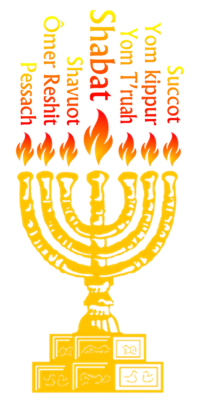
Shabat – weekly feast
Spring Feasts
- Pesach – Passover
- Omer Reshit – Firstfruits
- Shavuot – Pentecost
Fall Feasts
- Yom T’ruah – Day of Trumpets
- Yom Kippur – Day of Atonement
- Sukot – Tabernacles
The Biblical Calendar and the Holy Convocations involve the agricultural calendar of the land of Israel.
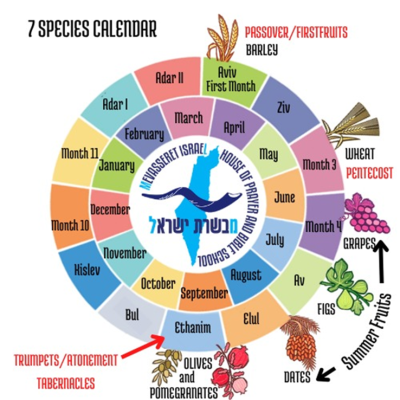
7 species of Israel
In Deuteronomy 8:6-10 we read about the 7 species:
‘So obey the mitzvot of Adonai your God, living as he directs and fearing him. For Adonai your God is bringing you into a good land, a land with streams, springs and water welling up from the depths in valleys and on hillsides. It is a land of wheat and barley, grapevines, fig trees and pomegranates; a land of olive oil and honey (dates); a land where you will eat food in abundance and lack nothing in it; a land where the stones contain iron and the hills can be mined for copper. So you will eat and be satisfied, and you will bless Adonai your God for the good land he has given you. ‘
עומר ראשית – Omer Reshit – FirstFruits
Omer is a sheaf, or a dry measure of grains, of approximately 2 liters.
The first mention of the word omer in the Tanach (First Testament) is in Exodus 16:16 when God sent the manna in the wilderness:
‘This is the thing which the Lord has commanded: ‘Let every man gather it according to each one’s need, one omer for each person, according to the number of persons; let every man take for those who are in his tent.’ ”’
In Leviticus 23:10-11, the term omer appears again:
‘“Tell the people of Isra’el, ‘After you enter the land I am giving you and harvest its ripe crops, you are to bring a sheaf of the firstfruits of your harvest to the cohen (priest). ‘He is to wave the sheaf before Adonai, so that you will be accepted; the cohen is to wave it on the day after the Shabbat. ‘
Adonai commanded us to bring a measure of grain, from the firstfruits of the harvest to the priest at the Temple. This firstfruit offering was probably barley, as we read in Exodus chapter 9.31:
‘Now the flax and the barley were struck, for the barley was in the head and the flax was in bud.”
The barley omer was waven on our behalf so that we would be accepted.
In the same way, Yeshua, when He rose from the dead, He was our Omer Reshit (sheaf of the firstfruits of the barley), given on our behalf, so that we may be accepted:
1 Corinthians 15:20
‘But now Messiah is risen from the dead, and has become the firstfruits of those who have fallen asleep. ‘
We also will be resurrected as God’s harvest, but Yeshua was the reshit, the head (rosh), the firstfruits of the barley in the hands of the Father.
ספירת העומר – Sfirat haOmer – Counting of the Omer
The term sfirat haomer (counting of the omer) is used to refer to the counting of the days between Pesach and Shavuot (Weeks or Pentecost):
Leviticus 23:15-16
‘‘And you shall count for yourselves from the day after the Sabbath, from the day that you brought the sheaf of the wave offering: seven Sabbaths shall be completed. Count fifty days to the day after the seventh Sabbath; then you shall offer a new grain offering to the Lord . ‘
Between Pesach and Shavuot, there is a period of counting, that is, an expectation for something that will happen. God is calling us to look forward to a new harvest. We know that at Shavuot time the wheat harvest is carried out:
Exodus 34:22
‘“And you shall observe the Feast of Weeks, (Shavuot) of the firstfruits of wheat harvest, and the Feast of Ingathering (Sukkot) at the year’s end.’
About the Wheat
Mathew 3.11-12
‘I indeed baptize you with water unto repentance, but He who is coming after me is mightier than I, whose sandals I am not worthy to carry. He will baptize you with the Holy Spirit and fire. His winnowing fan is in His hand, and He will thoroughly clean out His threshing floor, and gather His wheat into the barn; but He will burn up the chaff with unquenchable fire.”’
Who is the wheat? The wheat represents us, the harvest of God.
John 12.23-26
But Yeshua answered them, saying, “The hour has come that the Son of Man should be glorified. Most assuredly, I say to you, unless a grain of wheat falls into the ground and dies, it remains alone; but if it dies, it produces much grain. He who loves his life will lose it, and he who hates his life in this world will keep it for eternal life. If anyone serves Me, let him follow Me; and where I am, there My servant will be also. If anyone serves Me, him My Father will honor.
This is our life with God, to die to ourselves so He may live in us and we will bear fruits for Him.
Rejoicing with the Harvest
When we lay down our lives before God we start to live for His kingdom and for others. We sow into people’s lives, we pray for them, we minister to them, cry with them and there is a promise for us on:
Psalms 126:5-6
‘Those who sow in tears shall reap in joy.’ ‘He who continually goes forth weeping, bearing seed for sowing, shall doubtless come again with rejoicing, bringing his sheaves with him.’
(The context of this Psalm is Aliyah)
Deuteronomy 16.9-12
“You shall count seven weeks for yourself; begin to count the seven weeks from the time you begin to put the sickle to the grain. Then you shall keep the Feast of Weeks to the Lord your God with the tribute of a freewill offering from your hand, which you shall give as the Lord your God blesses you. You shall rejoice before the Lord your God, you and your son and your daughter, your male servant and your female servant, the Levite who is within your gates, the stranger and the fatherless and the widow who are among you, at the place where the Lord your God chooses to make His name abide. And you shall remember that you were a slave in Egypt, and you shall be careful to observe these statutes.
Chag Matan Torah – Feast of the Giving of the Torah
We spoke about Shavuot as Chag HaKatzir (Feast of Harvest), but this Feast has another name, which is Chag Matan Torah (Feast of the Giving of the Torah).
In addition to the expectation for the physical harvest, God had an expectation of something spiritual that He reported to Moses:
Exodus 3:1
‘Now Moses was tending the flock of Jethro his father-in-law, the priest of Midian. And he led the flock to the back of the desert, and came to Horeb, the mountain of God. ‘
Exodus 3:12
‘So He said, “I will certainly be with you. And this shall be a sign to you that I have sent you: When you have brought the people out of Egypt, you shall serve God on this mountain.”’
Exodus 5:1
‘Afterward Moses and Aaron went in and told Pharaoh, “Thus says the Lord God of Israel: ‘Let My people go, that they may hold a feast to Me in the wilderness.’ ”’
Our God was waiting for a new moed, a new appointed time, scheduled by Him to meet with us!
Our people understand that the Torah was given to us on Shavuot (around 50 days after Pesach).
Exodus 19:1
‘In the third month after the children of Israel had gone out of the land of Egypt, on the same day, they came to the Wilderness of Sinai. ‘
In the past God had a covenant with Abraham and his children, but here there is a covenant with a people and a NATION.
Exodus 19.16-20
Then it came to pass on the third day, in the morning, that there were thunderings and lightnings, and a thick cloud on the mountain; and the sound of the trumpet was very loud, so that all the people who were in the camp trembled. And Moses brought the people out of the camp to meet with God, and they stood at the foot of the mountain. Now Mount Sinai was completely in smoke, because the Lord descended upon it in fire. Its smoke ascended like the smoke of a furnace, and the whole mountain quaked greatly. And when the blast of the trumpet sounded long and became louder and louder, Moses spoke, and God answered him by voice. Then the Lord came down upon Mount Sinai, on the top of the mountain. And the Lord called Moses to the top of the mountain, and Moses went up.
Exodus 31:18
‘And when He had made an end of speaking with him on Mount Sinai, He gave Moses two tablets of the Testimony, tablets of stone, written with the finger of God.’
Exodus 19:3-6
And Moses went up to God, and the Lord called to him from the mountain, saying, “Thus you shall say to the house of Jacob, and tell the children of Israel: ‘You have seen what I did to the Egyptians, and how I bore you on eagles’ wings and brought you to Myself. Now therefore, if you will indeed obey My voice and keep My covenant, then you shall be a special treasure to Me above all people; for all the earth is Mine. And you shall be to Me a kingdom of priests and a holy nation.’
Marriage between God and His People
God is making an eternal covenant with our People and Nation. It is the civil marriage between God and our People.
Pesach represents the engagement (when the Bridegroom pays a price to receive His Bride). Yeshua paid with His blood. He paid the highest price. He gave His life for His Bride.
The torah represents the marriage contract, or ketubah. A ketubah is a Jewish marriage contract that outlines a husband’s responsibilities to his wife, including financial and conjugal obligations, traditionally signed by witnesses before a wedding ceremony. It serves as a prenuptial agreement designed to protect the woman’s rights, particularly in the event of divorce or the husband’s death.
We can say that the ketubah is a guarantee to the Bride.
‘
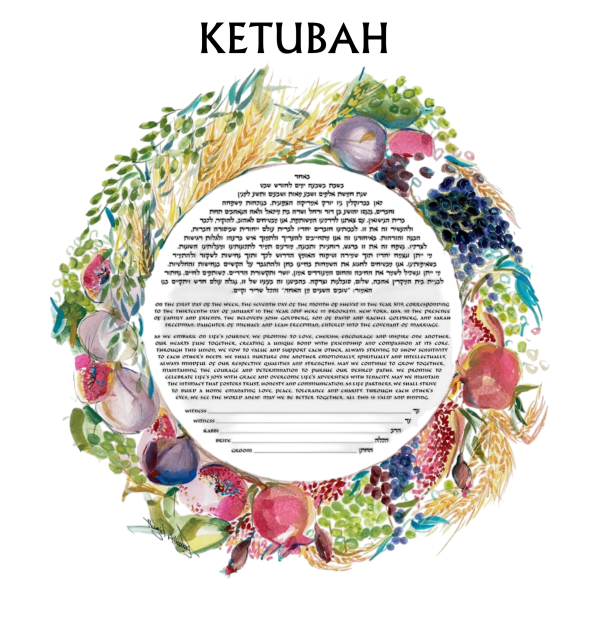
The Torah was not a meant to be a burden for us but to protect us, to give direction, guidance, also as a father that protects his son by giving him instructions and limits. The religious spirit perverted it, turning it into a prison of legalism.
Shavuot at the time of Yeshua
Yeshua, after being resurrected, during the period of sfirat haomer, appeared to his disciples with his glorified body, for 40 days! Before ascending to the Father, He also revealed expectation to His disciples:
Luke 24:49
‘Behold, I send the Promise of My Father upon you; but tarry in the city of Jerusalem until you are endued with power from on high.”’
They should continue counting the days, remaining in Jerusalem, because something would happen: they would be clothed with power from on high!
Acts 1. 8
‘But you shall receive power when the Holy Spirit has come upon you; and you shall be witnesses to Me in Jerusalem, and in all Judea and Samaria, and to the end of the earth.”’
Acts 2:2-4
‘And suddenly there came a sound from heaven, as of a rushing mighty wind, and it filled the whole house where they were sitting. Then there appeared to them divided tongues, as of fire, and one sat upon each of them. And they were all filled with the Holy Spirit and began to speak with other tongues, as the Spirit gave them utterance.’
Ephesians 1:13-14
‘In Him you also trusted, after you heard the word of truth, the gospel of your salvation; in whom also, having believed, you were sealed with the Holy Spirit of promise, who is the guarantee of our inheritance until the redemption of the purchased possession, to the praise of His glory.’
The Spirit is the seal, the guarantee that our Bridegroom will come back to take us to Him.
Song of Solomon 8:6
‘Set me as a seal upon your heart, As a seal upon your arm; For love is as strong as death, Jealousy as cruel as the grave; Its flames are flames of fire, A most vehement flame.’
Jeremiah 31:33
‘But this is the covenant that I will make with the house of Israel after those days, says the Lord : I will put My law in their minds, and write it on their hearts; and I will be their God, and they shall be My people.
John 14:15-18
‘“If you love Me, keep My commandments. And I will pray the Father, and He will give you another Helper, that He may abide with you forever— the Spirit of truth, whom the world cannot receive, because it neither sees Him nor knows Him; but you know Him, for He dwells with you and will be in you. I will not leave you orphans; I will come to you.’
Torah and Spirit are not opposites, they have the same purpose, to protect, instruct and adorn the Bride.
In the sublime love of Yeshua haMashiach.
Yoshua e Shoshana – Mevasseret Israel
Prayer Alerts and Articles